Tattva Samvad
Vādo hi satyavinirṇayāya
The Place of Ishvara
in Jain Darshana
An invitation to question, reflect, and seek understanding. Two days of scholarly dialogue grounded in reason, evidence, and the Jain tradition.
 An inquiry in the spirit of truth
and in the presence of
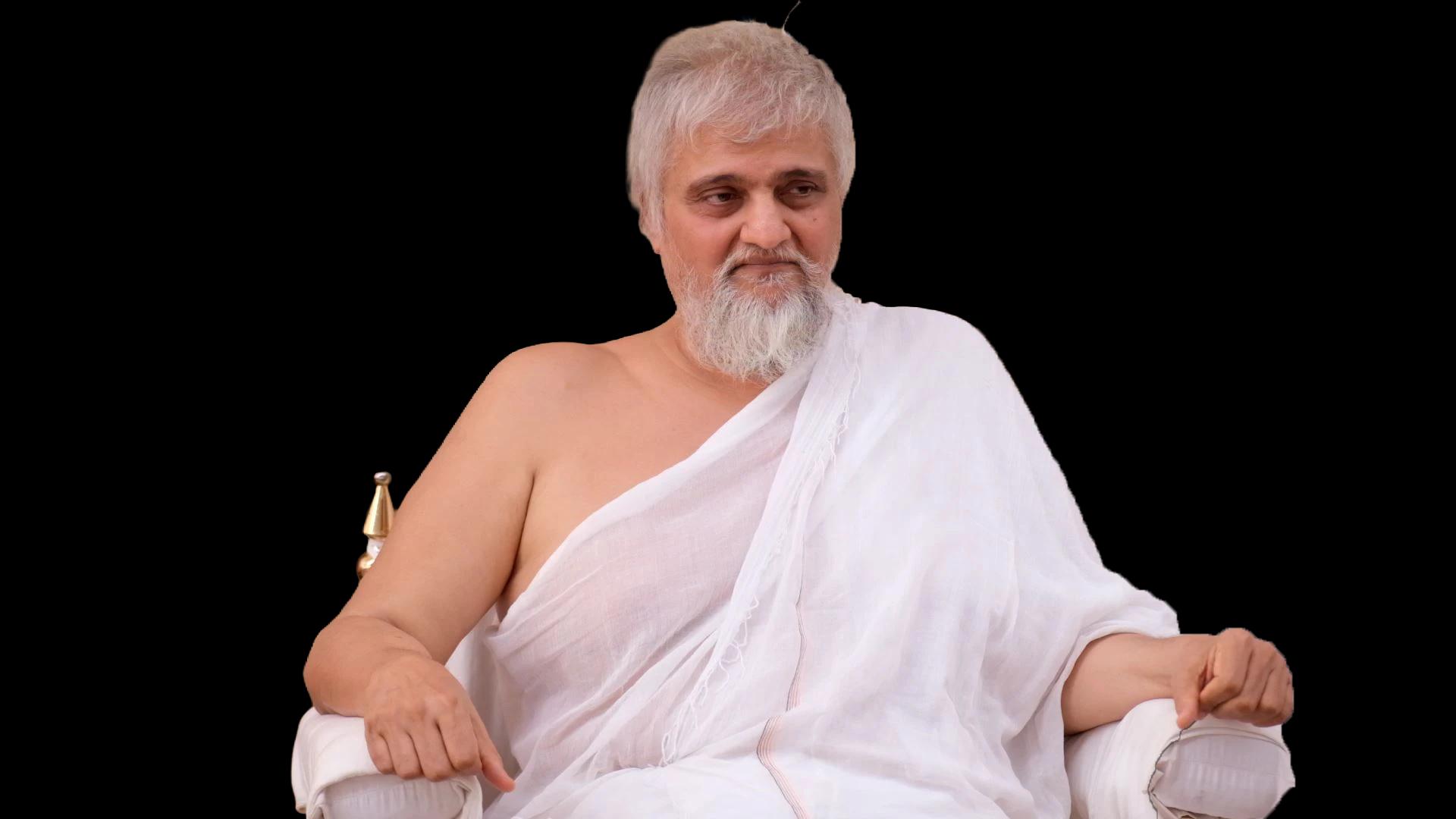
His Holiness Gachhadhipati Jainacharya Yugbhushansuriji Maharaja
Along with many of his learned disciples · Organised by Gitarth Ganga · Supported by JYOTBackground
Why a dialogue on Ishvara?
Religion and spiritual reflection hold an important place in human life. Yet many misconceptions and unresolved questions surround Īśvara, a foundational concept in the understanding of religion. This dialogue examines the existence and nature of Īśvara, and the role attributed to Īśvara in life, through reason, evidence, and open-minded discussion.
In ordinary life, people ask whether Īśvara governs events, grants blessings, protects devotees, responds to prayer, or is present within every living being. Such accessible questions lead into deeper inquiries concerning agency, omniscience, perfection, causality, grace, freedom, and the soul's highest potential.
The aim is to understand truth, not to win or lose.
Main dialogue
Questions proposed for the dialogue
01Is Jain Darshana theistic or non-theistic?
What are the grounds for calling a position theistic or non-theistic, and how should Jain Darshana be understood in relation to these terms?
02How can we know whether Ishvara exists?
How should this question be examined through reason, evidence, and a coherent account of reality?
03Does being Ishvara mean making the impossible possible?
How should divine qualities and powers be understood from a scientific perspective?
04What is the extent of the excellence, influence, and qualities of Ishvara-tattva?
How should the distinctive nature of divine qualities and influence be understood within a metaphysical framework, through reason and evidence?
05Does a vitaraga Ishvara give us anything? If so, what and how?
How can the ideal of a perfected being help transform our understanding, conduct, and life?
Proposed themes
Four themes, one shared method
All themes share a common foundation: Jain padārtha-vijñāna and the order of cause and effect, impartial examination, the search for truth, and an open-minded hearing of different approaches.
The Meaning, Existence, and Power of Ishvara
Every claim concerning existence, meaning, and power will be tested through evidence and reason, within the nature, qualities, and modes of substances and the order of cause and effect.
The Nature and Qualities of Ishvara
Understood not on the basis of the popularity of a description, but through philosophical coherence and evidential validity, to identify sound criteria for Īśvaratva.
The Role of Ishvara in the Journey from the Soul to the Perfected Self
Innate Īśvaratva, perfection attained through discipline, and an inwardly present potential, and the relationship between a living being's own effort and any contribution of Īśvara.
Grace, Right Understanding, and Relevance to Life
Whether and how Īśvara contributes to the causal process by which a worshipper's knowledge, dispositions, and conduct are transformed.
For participants
What you will gain
Meet the Visionary
Widely known as Pandit Maharaj Saheb, Jainacharya Yugbhushansuriji Maharaja is the 79th lineage holder in the tradition of Lord Mahavira, a scholar of the six systems of philosophy, modern science, ethics and the Jain scriptures. Scholars will engage with him directly and in depth.
Direct questions and conversation
One-to-one and group discussions with His Holiness and many learned Jain monks. Bring your questions and listen openly to different perspectives.
A special opportunity
A demonstration of the distinctive scriptural research of Gitarth Ganga, including its online, searchable database of the Jain scriptures.
Participation
Join the dialogue
Who can participate
All female and male scholars aged 45 or younger, residing in India and with good knowledge of Jain Darshana, are invited. This includes those who have completed or are pursuing a PhD in Jain Studies, and scholars holding postdoctoral or faculty positions at Indian academic institutions. Other scholars with relevant study and understanding of the subject are equally welcome.
International scholars visiting India in January 2027 are most welcome.
Accommodation, meals, and travel
Domestic flights within India, accommodation, meals, and local transportation will be provided by the organisers. Limited to 20 participants on a first-come, first-served basis. No honorarium is provided.
Dates
13–14 January 2027; the detailed programme for both days will be finalised separately.
Venue
Freedom Park, Bengaluru.
Scholarly panel
Multiple scholars, with a moderator able to bridge scriptural, academic, and public vocabularies.
Duration
Approximately three hours for the main dialogue, within the two-day programme.
Audience
Scholars, invited guests, students, and members of the wider public attending in person.
Preparation
Themes and guiding questions will be shared in advance. Scholars are expected to prepare their arguments and references.
Languages
In person only. The discussion will be conducted in English and Hindi.
About you
Academics
Travel & stay
Review
Let's begin with a few details about you.
In-person participation · Bengaluru · 13–14 January 2027